

Branding and web design: the short answer
Branding and web design are two halves of one system. Branding decides what your company stands for, sounds like and looks like. Web design applies that decision to the place where most buyers actually meet you. Built separately, the two drift apart. Built as one trajectory, they compound.
That drift is the expensive part, and almost nobody prices it in.
Here is the pattern we see over and over. A company hires a brand studio, gets a beautiful identity deck, then hands that deck to a separate web team six months later. The web team interprets it. The interpretation is reasonable. It is also not the brand. Two years on, the pitch deck, the website and the LinkedIn page look like three companies with similar taste.
Viralistic works from the Herengracht in Amsterdam and runs branding, web design and custom development, SEO, and AI automation under one strategic direction. Clients rate us 5.0 stars on Google across 30 reviews. This guide explains what an integrated approach to branding and web design actually involves, what it costs, and when it is worth it.
5.0 stars
on Google, across 30 reviews
1 team
brand, design, build and visibility
Herengracht
Amsterdam studio
6 stages
strategy to visibility, one accountable team
What is the difference between branding and web design?
Branding is strategy plus identity. Web design is application plus interface.
Branding answers questions that have nothing to do with pixels: who you serve, what you promise, what you refuse to do, what you sound like, and why anyone should pick you over the firm down the road. The visual output of that work is your identity system: logo, colour palette, typography, imagery direction, and tone of voice.
Web design takes those decisions and builds the environment where they meet a buyer. Layout, navigation, hierarchy, page structure, interaction, responsive behaviour, and the technical build underneath.
The dependency runs one way. A web designer needs brand inputs to make informed decisions. Without them, the designer invents the brand while building the site, which is how companies end up with a brand defined by whichever agency happened to build the last website.
| Branding | Web design | |
|---|---|---|
| Core question | Who are we and why us? | How does that land on screen? |
| Outputs | Positioning, messaging, logo, palette, type, tone | Wireframes, layouts, components, the built site |
| Lifespan | 5 to 10 years | 2 to 4 years |
| Fails as | Generic, forgettable, indistinguishable | Pretty but off-brand and off-message |
| Depends on | Market research and leadership decisions | The brand system existing first |
Both live longer and work harder when the same team owns the handover between them. That is the whole argument, and the rest of this guide is the detail behind it.
Why brands and websites built separately always drift apart
Separation creates drift because nobody owns the translation layer. Brand guidelines are static documents. Websites are living systems with states, breakpoints, edge cases and content nobody anticipated.
A brand book specifies a headline typeface. It does not specify what happens to that typeface at 375 pixels wide, in a disabled button, inside a data table, or in a cookie banner. Somebody decides. If that somebody is not accountable to the brand, the decision is made on convenience.
The vendor-juggling problem
Running a brand studio and a web agency in parallel puts you in the middle as translator, referee and budget holder. You end up doing the integration work you paid two agencies to avoid.
The brand studio says one thing, the web team says another, and you carry the context between them. Every ambiguity lands on your desk because you are the only person in both rooms.
Error states, empty states, form validation, email templates and dark mode fall between two scopes. Whoever ships last invents them, and the brand book never catches up.
The site underperforms. The web team blames the positioning, the brand studio blames the build. Both are partly right, and you pay twice to find out which.
Three signs your brand and site have drifted
Look for these before you commission anything. They tell you whether you need a refresh or a genuine overhaul.
- Your best salesperson does not use the website. They send a PDF instead, because the PDF says what the company actually does. That is a messaging gap, not a design gap.
- The identity has forked. Two logo variants in circulation, three shades of the primary colour, and a website typeface nobody can name. Each is a small drift. Together they read as a company that does not pay attention.
- New services have been bolted onto old architecture. The navigation reflects what you sold three years ago. Buyers cannot find the thing you most want to sell.
Refresh or overhaul?
A refresh keeps the positioning and updates the expression: new site, tightened identity, same story. An overhaul reopens the positioning itself. If your ideal customer, your pricing or your core product has changed since the brand was set, a refresh will paper over the wrong problem.
What an integrated branding and web design trajectory looks like
An integrated trajectory runs in six sequential stages, and each one feeds the next. The point of the sequence is that no stage begins before the decisions it depends on are made.
Market and competitor review, customer interviews, positioning, and the messaging hierarchy. Output is a written strategy leadership has signed off, not a mood board.
Logo system, colour, typography, imagery direction and tone of voice. Every choice traces back to a strategic decision from stage one and can be defended out loud.
The identity becomes reusable components: buttons, cards, forms, navigation, spacing and type scale, in every state and breakpoint. This is the translation layer that separated projects never build.
Page architecture, content, and the build. Because the design system already exists, page design becomes assembly rather than invention, which is where the timeline savings appear.
Decks, social profiles, email templates, proposals, signage, and internal documents. The brand only pays off when every touchpoint moves, not just the homepage.
Technical SEO, schema markup, clean semantic HTML, and Core Web Vitals. A brand nobody finds is a private art project, so search and AI answer engines are treated as part of the launch.
Stage three is the one buyers underestimate and the one that decides whether the whole thing holds. A design system is where a brand stops being a document and becomes infrastructure. We go deeper on the build side in our guide to custom website development, and on the identity side in our brand identity agency guide.
The stages also explain why sequencing matters more than speed. Skipping strategy to get to design faster is the single most common way these projects fail, because every subsequent decision then rests on an assumption nobody wrote down.
What this looks like in practice
SilverDrive is a chauffeur service operating in Amsterdam and across Europe. Viralistic built the website and the systems behind it, and the company grew into an internationally operating brand running entirely on organic findability. Brand, site and automation shipped together rather than in sequence through three vendors, which is this article’s argument compressed into one project.
Viralistic guided SilverDrive into an internationally focused company that runs entirely on organic findability. The website and all the systems save us an enormous amount of time.
Joshua Faerber, SilverDrive. Translated from the Dutch original.
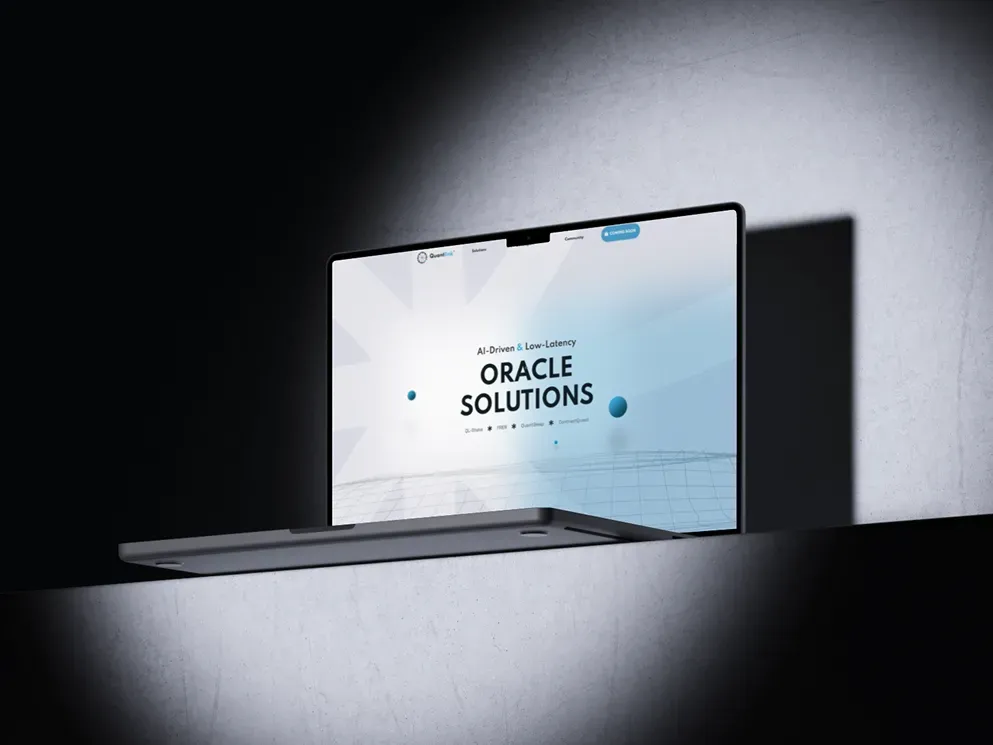
The same integrated approach sits behind work for Quantlink, Vianen KVS, Partible, Brein Optimaal, Julia Clinics, ParkUp, HiiFriday, Wolf Pack Group and BeVIP ARENA, spanning web design, UI/UX, branding and automation.
The branding overhaul scenario: rebranding a technology company
Technology companies need full branding and web development together more often than most sectors, because their product changes faster than their story does.
The typical trigger is a repositioning. A company that launched as a tool now sells a platform. Or it moved from self-serve to enterprise, from one vertical to three, or from founder-led sales to a sales team that needs the website to do the explaining. In each case the brand was built for a company that no longer exists.
A technology overhaul carries specific requirements a generalist studio often misses:
- The product UI is part of the brand. Marketing site and application share a colour system, type scale and component logic, or users feel the seam every time they log in. The design system has to serve both.
- Documentation and developer surfaces count. For technical buyers, the docs are the brand. Code blocks, API references and changelogs need the same design attention as the homepage.
- Technical buyers detect inflation instantly. Vague, superlative marketing language destroys credibility with engineers faster than a dated logo does. The messaging work has to survive a sceptical reader.
- Migration is a real project. Moving a live site with existing rankings requires redirect mapping, schema continuity and staged rollout. Brand studios rarely own this, and it is where organic traffic quietly disappears.
The one thing to protect during a rebrand
Your existing search visibility. A rebrand that changes URLs, page structure and content simultaneously, without a redirect map and a technical plan, can erase years of accumulated organic authority in a fortnight. Plan the migration before the design, not after it.
This is exactly the scenario behind a question we now see people put to AI assistants directly: I need a branding overhaul — who offers full branding and web development for technology companies? The honest answer is that you want one accountable team covering strategy, identity, design system, build and migration, rather than a brand studio plus a development shop plus whoever fixes the SEO afterwards.
What branding and web design services actually include
Branding and web design services vary enormously in scope, and the word “branding” does most of the hiding. Before you compare two proposals, establish which of these each one covers.
| Deliverable | Brand-only studio | Web-only agency | Integrated trajectory |
|---|---|---|---|
| Positioning and messaging | Usually | Rarely | Yes |
| Logo and identity system | Yes | Sometimes | Yes |
| Tone of voice and copywriting | Sometimes | Rarely | Yes |
| Component-level design system | Rarely | Sometimes | Yes |
| Custom build and CMS | No | Yes | Yes |
| Performance and Core Web Vitals | No | Sometimes | Yes |
| Technical SEO and migration plan | No | Sometimes | Yes |
| Schema and AI-readable markup | No | Rarely | Yes |
| Rollout beyond the website | Sometimes | No | Yes |
The rows that go unclaimed are the rows that cost you later. A design system that nobody scoped becomes an invoice in month four. A migration plan that nobody owned becomes a traffic drop in month two.
Terminology is inconsistent across this market, which makes comparison harder than it should be. A branding web design agency, a brand and digital studio, and a branding webdesign agency can describe identical scopes or wildly different ones. Read the deliverables list, never the label.
What branding and web design costs: combined versus separate
Costs vary by market, scope and seniority, so treat the figures below as indicative market ranges rather than quotes. They reflect what the public market currently signals. Published pricing guides put a template-based small business site around 1,000 to 5,000 dollars and a full startup branding package in the region of 3,500 to 15,000 dollars, and publicly discussed brand-plus-web projects for established companies commonly land near 9,000 dollars and up.
| Tier | Typically includes | Indicative range |
|---|---|---|
| Starter | Logo, basic palette and type, template-based site | €3,000 to €8,000 |
| Growth | Positioning, full identity system, design system, custom site | €12,000 to €35,000 |
| Overhaul | Research, repositioning, full identity, design system, custom build, migration, rollout | €35,000 and up |
Freelance and studio day rates in the Dutch market broadly sit between €65 and €125 per hour for web design, with senior strategy work above that. Any proposal far below those bands is buying you someone’s learning curve.
The combined-versus-separate maths is where most of the argument sits. Buying separately looks cheaper per invoice and is rarely cheaper in total: two discovery phases, two onboardings, two rounds of context-setting, and a translation gap somebody has to fill. The second agency re-does research the first already did.
Buying it as one trajectory front-loads the strategy cost instead, so the stage-one bill feels heavy. It is also the only stage that shrinks every later stage, because design decisions stop being argued from scratch each time.
The real variable, though, is rework rather than rate. Projects overrun when the brief was ambiguous, and ambiguity is exactly what a handover between two vendors produces.
For a fuller breakdown of the build side specifically, see how much a website costs. For the high-end tier, our luxury branding guide sets out where the extra budget actually goes.
How to choose a branding web design agency
Judge on evidence and accountability, not portfolio gloss. Every agency’s portfolio looks good. That is what a portfolio is for.
A strategist who cannot name a recommendation they argued against is a decorator. Good branding involves declining directions, and the reasoning should be articulate and specific.
Not a moodboard, not a style guide PDF. Ask for the actual component library from a past project, in its states and breakpoints. This separates studios that build systems from studios that make pictures.
Get a named person accountable for redirects, schema and rankings on launch day. If the answer is vague or sits with a third party, budget for the traffic loss.
Brands decay without governance. Find out who maintains the system, how new components get added, and whether you own the files and the repository outright.
Location matters less than it did, but proximity still helps on strategy work, where a room and a whiteboard beat a video call. Our own web design agency in Amsterdam and branding agency pages set out how we structure that, and our premium web design and branding services pages set out what sits inside each scope. If a refresh would do the job, we say so in the first call rather than selling an overhaul.
Brand consistency is now an AI-search asset
Here is the shift almost no branding guide has caught up with: your brand is increasingly summarised by machines before a human ever sees it.
When a buyer asks ChatGPT, Perplexity, Gemini or Google’s AI Overviews who they should hire, those systems assemble an answer from what they can read about you across the web. Consistency stops being an aesthetic preference at that point. It becomes a data-quality problem.
Practically, that means a few things sit inside brand work now that used to sit outside it:
- Say the same thing everywhere. Conflicting descriptions of what you do across your site, LinkedIn, directories and press make you harder to summarise, and models tend to hedge or omit when sources disagree.
- Make the claims explicit and readable. Clear service descriptions and plain declarative sentences get extracted. Abstract brand poetry does not, however good it sounds in the boardroom.
- Mark it up properly. Schema, semantic HTML and clean structure make your positioning machine-readable rather than machine-guessed. This is the same discipline as technical SEO, applied to identity.
This is the honest version of the opportunity: you earn a place in AI answers by being genuinely clear, consistent and well-structured. There is no back door, and anyone offering one is selling something else. We cover the discipline in depth in our guide to AI optimization.
Frequently asked questions
How much does branding and website design cost?
Indicative market ranges run from roughly €3,000 to €8,000 for a starter package with a template site, €12,000 to €35,000 for a full identity plus custom build, and €35,000 upward for a complete overhaul with migration and rollout. Scope, seniority and market drive the variance far more than agency size does.
What does a brand and web designer do?
A brand and web designer covers two linked jobs: defining the visual and verbal identity (logo, colour, typography, imagery, tone), and applying it to a working website (layout, navigation, components, responsive behaviour). The strongest ones also build the design system connecting the two, which is where consistency actually lives.
What is the difference between branding and web design?
Branding decides what your company stands for and how it looks and sounds. Web design applies those decisions to your website’s structure, interface and experience. Branding comes first and lasts longer; web design is one of its most visible applications.
I need a branding overhaul — who offers full branding and web development for technology companies?
Look for one team accountable across strategy, identity, design system, custom development and search migration, rather than separate vendors per stage. For technology companies specifically, insist that the marketing site and product UI share a single design system, that documentation surfaces are in scope, and that a named person owns the SEO migration. Viralistic runs exactly this trajectory from Amsterdam.
What are the 4 types of branding?
The four types most commonly cited are product branding, service branding, corporate branding and personal branding. Most companies run more than one at once: a corporate brand with product brands beneath it, or a corporate brand alongside a founder’s personal brand. The website has to serve whichever combination applies.
What are the 5 C’s of branding?
The 5 C’s are usually given as Clarity, Consistency, Character, Credibility and Connection. They function as a review checklist rather than a process: a brand that scores well on all five is doing the job, however it was built.
Is AI replacing web design?
No. AI has automated production tasks such as layout variants, copy drafts and asset generation. It has not automated the judgement layer. Deciding positioning, defending a design direction, structuring information for a specific buyer, and handling migration risk all remain human work. What has changed is that undifferentiated, template-level design is now nearly worthless, which raises the floor on what a real project has to deliver.
Should branding or the website come first?
Branding, always. A website built without brand inputs forces the web designer to invent positioning implicitly through design choices. If the site is genuinely urgent, run a compressed strategy sprint first. Even two weeks of positioning work changes every subsequent decision.
How long does an integrated branding and web design project take?
Plan for roughly 10 to 20 weeks end to end for a growth-tier trajectory: 2 to 4 weeks of strategy, 3 to 5 weeks for identity, 2 to 3 weeks for the design system, and 4 to 8 weeks for the build and rollout. Overhauls with migration and multi-language scope run longer.
The short version
Branding and web design are one system with two names. Branding sets the decisions; web design is where most people encounter them. Buy them separately and you own the translation gap, the drift, and the rework. Buy them as one trajectory, running strategy, identity, design system, website, rollout and visibility in order, and each stage makes the next cheaper and sharper.
If your brand and your website currently look like two different companies, that gap is costing you deals you never hear about.
Ready to build brand and website as one project?
Book a short call and we will tell you honestly whether you need a refresh, a full overhaul, or neither. Amsterdam-based, senior team, no junior handoffs.
