 Strategic call
Lecture
Anthropic
A lecture on AI at Anthropic, the company behind Claude, on the difference between predictable automation and probabilistic AI models.
 /
Digital Partner
Marrallisa Kreijkes is an AI keynote speaker and AI trainer based in Amsterdam who does not only explain AI, she builds with it every day. She gives keynotes, guest lectures and trainings for conferences, companies and universities, in English or Dutch, so your audience leaves knowing what to do differently tomorrow.
From the main stage of an international conference to a lecture hall full of students and a training room at a car finance company.
Berlin, October 2026
One of the speakers on the main stage of n8n's first conference ever, as an official n8n Ambassador.
Explore ↗Lecture
A lecture on AI at Anthropic, the company behind Claude, on the difference between predictable automation and probabilistic AI models.
Training
A training on getting found in AI, so the brand shows up in the answers of ChatGPT, Gemini and Google.
Maastricht, 4 November 2026
A hands-on workflow automation workshop in n8n for students from every faculty, together with the student associations MAIN and TCM.
Explore ↗Photos n8n In The Loop 2026: William Jezequel (OHE!)
Every format is built for your audience. Choose what fits in the request form, or leave it open and we decide together.
30 to 60 minutes, from EUR 3,500
For conferences, kick-offs and client events. Clear, current and full of examples from real projects, so the audience sees AI differently.
Explore ↗Education rate, from EUR 1,250
For universities, business schools and colleges. Matched to the course and level, with an assignment students carry out themselves.
Explore ↗Half day, from EUR 4,500
Hands-on with the tools your team already uses, on your own cases. Participants build something that works on Monday.
Explore ↗Several sessions, from EUR 15,000
From keynote to team trainings and AI champions. For organisations that want AI to become part of how they work.
Explore ↗Booking an AI keynote speaker is easy. Finding one after whom your audience actually does something differently is harder. Many talks about AI are a tour of impressive demos: the room applauds, everyone goes home and on Monday nothing changes. The audience saw a show, not a way of working.
Marrallisa Kreijkes works differently, because she does not follow AI from the sidelines. As founder of Viralistic, she builds AI applications and automations for companies every week, with tools such as n8n and Claude. She explains what works, what does not and why, and shows your audience what it can do itself. She has done that on the main stage of n8n In The Loop, in a lecture at Anthropic, in a training at Volkswagen Pon Financial Services and in a lecture hall in Maastricht.
Marrallisa Kreijkes is the founder of Viralistic in Amsterdam, an official n8n Ambassador and an AI keynote speaker who builds what she explains. She has worked at the meeting point of design, technology and strategy for more than ten years, and uses AI for brands that do not settle for average.
That she builds what she talks about shows in the room. A question about privacy, cost or what happens when an AI model gets it wrong gets an answer from practice, not from a press release.
Marrallisa speaks about AI, automation and digital strategy, and three subjects come back often: getting found in AI, choosing well between AI and automation, and making sure people actually use AI. Every session is tailored to the audience, from boards to students. Looking for another AI subject? Just ask.
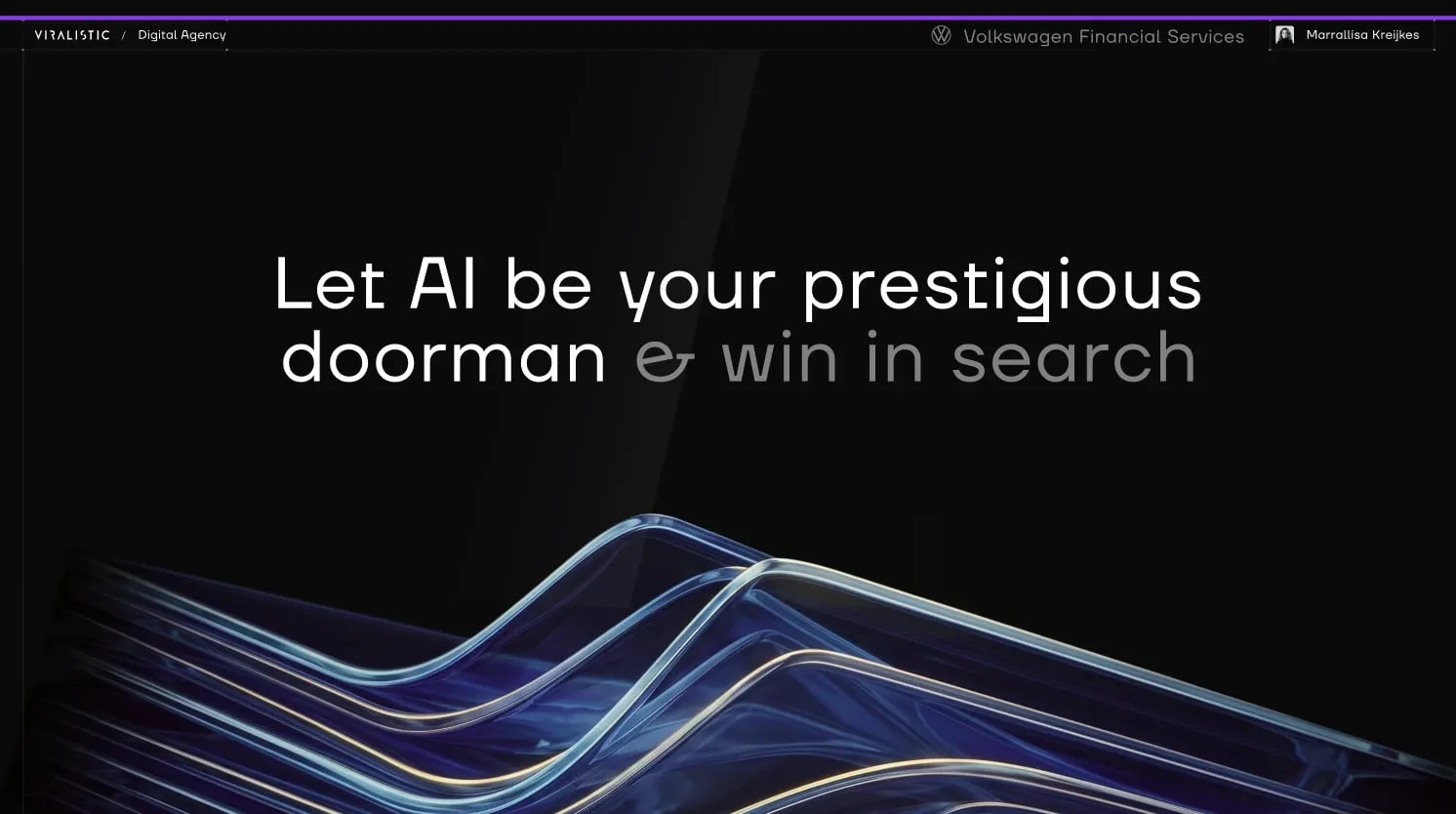
Your first impression increasingly happens in a chat you are not part of. Someone asks ChatGPT, Gemini or Google who you are or which company fits best, and AI answers with whatever it finds about you online. That answer is your digital doorman. In this keynote, which Marrallisa gave as a training at Volkswagen Pon Financial Services among others, she shows how to train that doorman, with her own method for ranking high in Google and in AI answers.
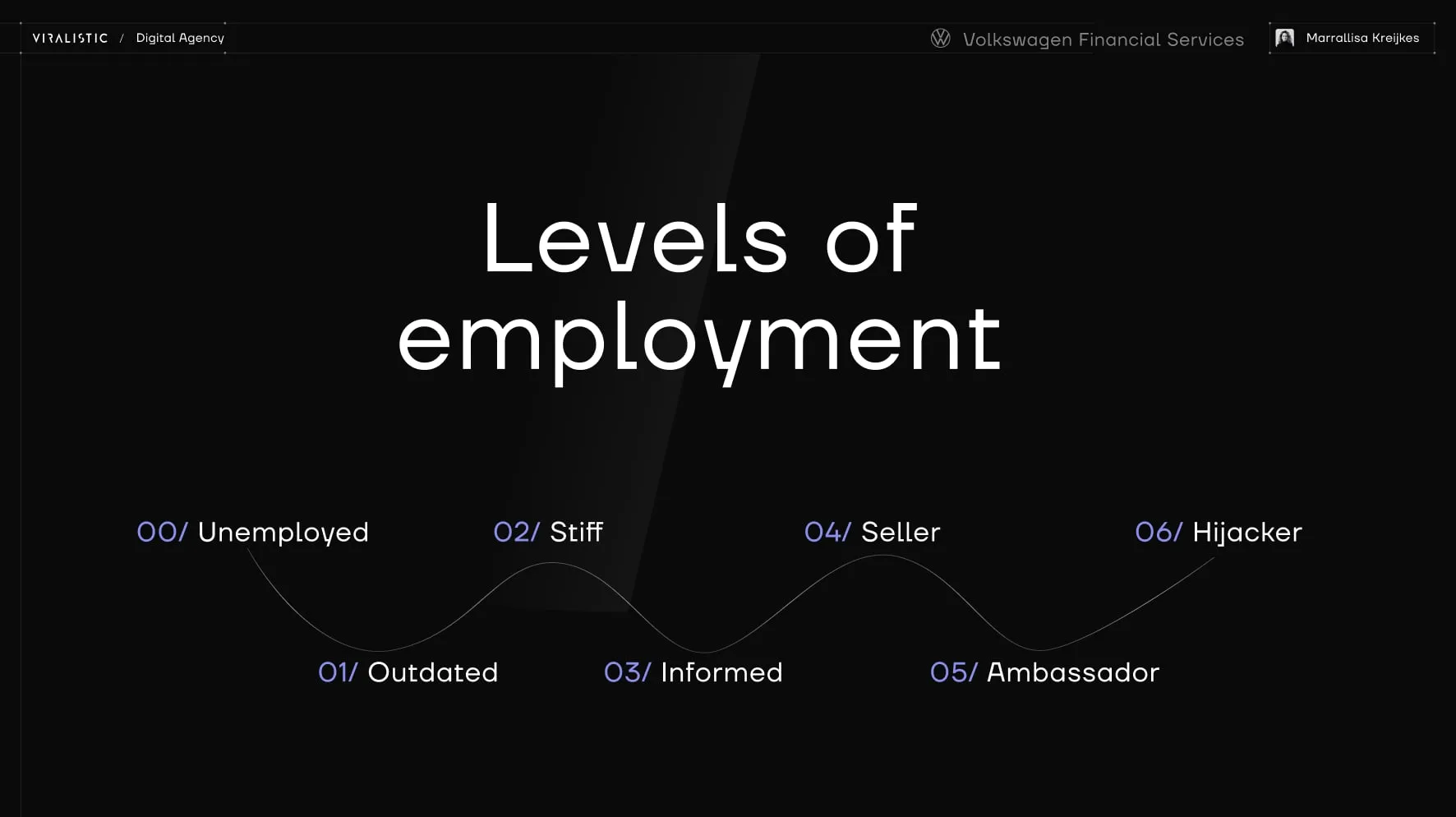
At its core is her “Levels of employment” model: how well AI is working for you.
The higher the level, the better the answers AI gives about you. The thinking comes from our client work on generative engine optimization.
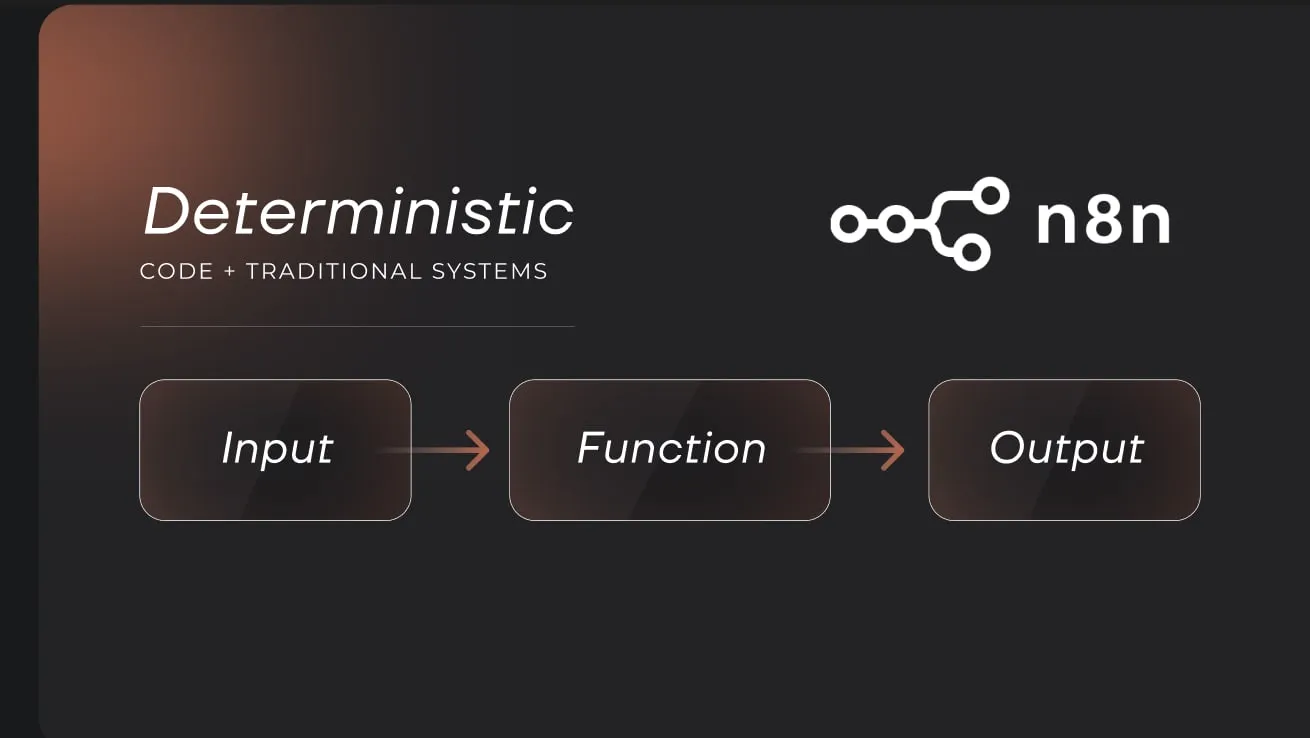
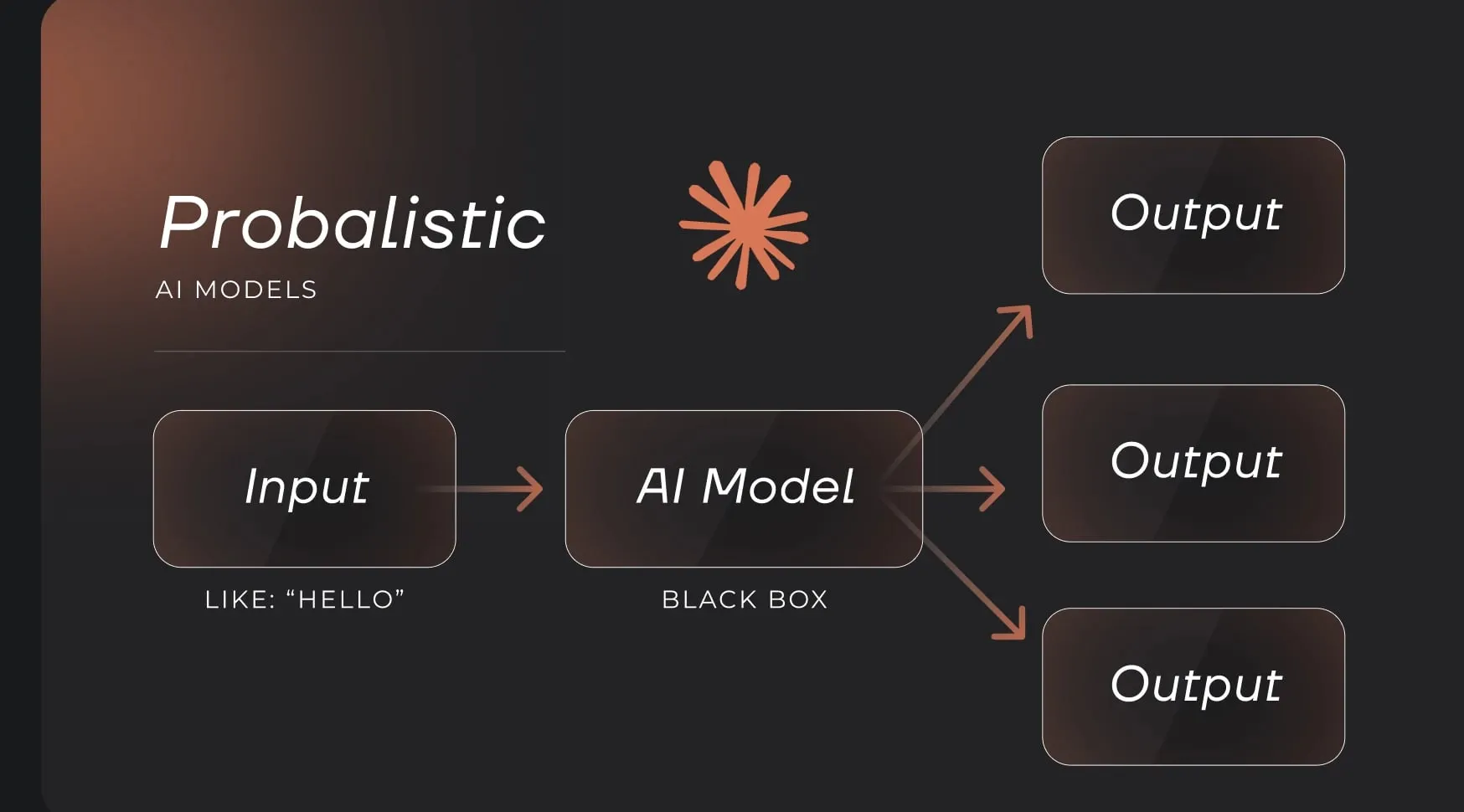
Not every problem calls for AI. A workflow in n8n does the same thing every time it gets the same input, while an AI model gives a slightly different answer to the same question. That difference decides where AI is safe to use and where plain automation is the better choice. Marrallisa used this framework in her lecture at Anthropic, the company behind Claude. It helps teams use AI where it adds value and keep everything else reliable.
Most employees have tried ChatGPT once. Few teams have woven AI into their work. This session is about the step in between: which tasks to tackle first, how to handle doubt and resistance, and how to make good habits stick.
A keynote inspires, a workshop gets people doing and a training changes how a team works. Choose the format by what your audience should be able to do afterwards.
| Format | Length | Group | From (excl. VAT) |
|---|---|---|---|
| Keynote or AI talk | 30 to 60 minutes | Any room size | EUR 3,500 |
| Guest lecture | 45 minutes to 2 hours | A class or hall | EUR 1,250 |
| Workshop or training | Half a day | A team, up to 30 | EUR 4,500 |
| AI training | A full day | A team | On request |
| AI adoption programme | Several sessions | A department | EUR 15,000 |
Not sure? Choose “Not sure yet” in the request form, and you get a proposal that fits your goal and budget.
AI training for employees works when people practise on their own work, in their own tools, and someone in the team keeps the habit alive. A keynote on its own rarely changes much. A keynote followed by hands-on sessions and a few AI champions does.
The need is real. According to Statistics Netherlands (CBS), 17 percent of Dutch companies used AI in 2025, up from 8 percent in 2023. Among companies with 250 or more employees, it was 66 percent. Of the companies that considered AI but do not use it, 73 percent name a lack of experience as the main reason. Training solves exactly that.
An AI adoption programme usually looks like this:
For more on setting up such a programme, read our guide to AI training for employees.
The EU AI Act requires organisations that develop or use AI systems to take measures that support the AI literacy of their staff. That obligation has applied since 2 February 2025, and national authorities have supervised it since 2 August 2026.
Since the amendment through the Digital Omnibus, organisations no longer have to guarantee a specific level of AI literacy. They do have to take demonstrable measures that fit their people’s knowledge and how AI is used in the organisation. According to the European Commission’s questions and answers, no certificate is needed: an internal record of trainings and guidance is enough. The Commission also warns that only asking staff to read an AI system’s instructions is in many cases not enough. You can read the full text in Article 4 of the AI Act.
A training by Marrallisa fits that approach, as a demonstrable measure you record in your training overview. A keynote, workshop or training is not a certification, and it is not legal advice. It does help your people understand AI, see the opportunities and risks, and work responsibly with the tools you use.
Marrallisa gives guest lectures and workshops on AI and automation at universities, business schools and colleges. On 4 November 2026 she taught a hands-on workflow automation workshop in n8n at Maastricht University, together with the student associations MAIN and TCM. Students from every faculty picked their own automation idea, built it live and put it online.
A guest lecture connects to the course and the students’ level. Think of AI in marketing and communication, automation for entrepreneurship, or AI search and the future of being found online. Teaching teams can also book a workshop on AI in their own work. Choose “Education” in the request form, and we take what a programme can spend into account.
Marrallisa speaks for conferences and events, enterprises, small businesses, universities and the public sector. The content changes per audience, the approach does not: concrete, and honest about what AI cannot do.
At a conference she opens or closes the day with a keynote that sticks. In an enterprise, a keynote or programme connects to your tools, policies and compliance. Small businesses get most out of a practical workshop where the team saves time straight away. At universities she gives guest lectures and workshops for students and teaching staff, and in the public sector and non-profits the focus is often responsible use of AI and AI literacy.
A good AI keynote speaker works with AI, is honest about what it cannot do and adapts the story to your audience. Look for these five things:
A keynote or AI talk by Marrallisa costs from EUR 3,500. A guest lecture for education costs from EUR 1,250, a half-day workshop or AI training from EUR 4,500 and an AI adoption programme from EUR 15,000. All prices exclude VAT and travel costs.
The final fee depends on the length, the preparation, the tailoring and the travel. A keynote at a large conference or a training on your own cases needs more preparation than a short talk, and a programme over several months costs more than a single session. That is why the request form also asks for your budget, in five bands from less than EUR 1,000 to more than EUR 10,000. You get a proposal that fits your goal, or honest advice if your goal needs more. A smaller budget? Ask anyway: sometimes a shorter or online format fits.
You book Marrallisa through the request form. There you say what kind of organisation you are, which format you are looking for, your budget, the date and your wishes. You get a personal reply with a proposal. Prefer to talk first? Plan a 30-minute call.
The earlier you ask, the better the chance your date is free. Spring and autumn are busy months for events.
An AI keynote speaker is only good if your audience does something with it. Marrallisa Kreijkes combines the stage with practice: she builds with AI every week and turns that into keynotes, guest lectures and trainings that move people. Tell us in the request form what you are organising, and you get a tailored proposal.
An AI keynote speaker translates artificial intelligence into what it means for a specific audience, such as employees, students or customers. That can be a keynote, talk, guest lecture or training. A good AI speaker combines inspiration with concrete examples, covers opportunities and risks and gives the audience a clear next step.
A keynote lasts 30 to 60 minutes and gives a whole room a shared picture of AI. A workshop is smaller and hands-on: participants build something themselves. An AI training goes deeper for half a day or a full day into a team’s own tools and tasks, so new ways of working stick.
A keynote or AI talk costs from EUR 3,500, a guest lecture for education from EUR 1,250, a half-day workshop or training from EUR 4,500 and an AI adoption programme from EUR 15,000, excluding VAT and travel. The fee depends on length, preparation, tailoring and location. You always get a proposal first.
Yes. Marrallisa gives guest lectures and workshops at universities, business schools and colleges, such as the workshop at Maastricht University on 4 November 2026 with MAIN and TCM. The lecture connects to the course and the students’ level. Choose education in the request form, and we take the budget into account.
Yes. Marrallisa speaks and trains in English and Dutch, and gives sessions for international teams and conferences. The workshop at Maastricht University, for example, was in English. State your preferred language in your request, and the examples are tailored to your audience.
Yes, as part of your approach. Since 2 February 2025, the AI Act requires organisations to take measures that support the AI literacy of their staff. A training is such a measure, which you record in your internal training overview. According to the European Commission, no certificate is needed, and a training does not replace legal advice.
Ask as early as possible, ideally a few months before your event. Spring and autumn are busy, and a tailored keynote or training needs time for a briefing and preparation. Is your date soon? Ask anyway, because a shorter or online format sometimes still fits.
Yes. Keynotes, guest lectures and trainings can be on site, online or hybrid. A hands-on workshop works best on site, because participants get help with building straight away. For online sessions we agree on the technology and interaction in advance, so people at home take part actively too.
Yes. Most sessions are made for people who are not programmers, such as marketers, managers, students and customer service teams. The n8n workshop in Maastricht did not require any coding either. Concepts are explained with examples from everyday work, and workshops use tools that need no code.
By practising on their own tasks, starting with two or three concrete applications and appointing an AI champion per team who helps colleagues. A follow-up session after a few weeks shows what works and what can be better. That way AI becomes a habit instead of a one-off moment of inspiration.
At every step you know what happens and what you receive.