Last updated:
May 28, 2026
What Is Ahrefs? The Complete Guide to the SEO Tool That Outclasses the Competition
Key takeaways 1. What is Ahrefs? Ahrefs is an all-in-one SEO platform that helps you understand exactly what is happening in search, both on your own site and on every competitor you care about. It started life in 2010 as a backlink checker. Today it is a full marketing intelligence suite that thousands of agencies, […]
Key takeaways
- Ahrefs is an all-in-one SEO and marketing intelligence platform built on one of the largest web crawlers in the world, second only to Google
- The core toolset covers backlink analysis, keyword research, content research, rank tracking, and site auditing, all running off the same data
- 2026 pricing runs from $29 per month (Starter) to $1,499 per month (Enterprise), with Lite at $129, Standard at $249, and Advanced at $449. There is no free trial, though Ahrefs Webmaster Tools is free for your own verified site
- Ahrefs competes head to head with Semrush, but most SEO professionals rate its backlink and keyword data higher
- The tool is only as good as the strategy behind it. At Viralistic we use Ahrefs to grow clients like SilverDrive through organic search alone, with zero ad spend
1. What is Ahrefs?
Ahrefs is an all-in-one SEO platform that helps you understand exactly what is happening in search, both on your own site and on every competitor you care about. It started life in 2010 as a backlink checker. Today it is a full marketing intelligence suite that thousands of agencies, in-house teams, and solo founders rely on to make decisions backed by real data instead of gut feeling.
I am Marrallisa, founder of Viralistic, a digital agency in Amsterdam. Ahrefs is one of the tools we live inside daily, so this guide is written from the perspective of people who actually use it to grow client revenue, not from a feature sheet. By the end you will understand what Ahrefs does, what each part of it is for, what it costs in 2026, and whether it is the right tool for your situation.
At its core, Ahrefs crawls the web around the clock and structures what it finds into something you can search and act on. That gives you a clear view of four things: what your competitors are doing in search, what your audience is actually typing into Google, how your own site is performing, and where your backlink profile is strong or weak.
Why the crawler matters so much in SEO
The thing that sets Ahrefs apart is the quality of its underlying data. Its bot, AhrefsBot, is one of the most active crawlers on the entire web, behind only Google itself. That scale is the reason the backlink index and keyword database feel more complete than most rivals. When a tool sees more of the web, the numbers it gives you are closer to reality, and SEO decisions made on accurate data simply work better.
A short history of Ahrefs
Ahrefs did not start as the heavyweight it is now. Dmitry Gerasimenko founded it in 2010 as a straightforward backlink checker. The name comes from the HTML “href” attribute used in hyperlinks, which tells you everything about where the focus began. The platform grew in clear stages.
- 2010: launched as a backlink analysis tool
- 2011 to 2015: keyword research and rank tracking arrived
- 2015 to 2020: site audit and content explorer turned it into a full suite
- 2020 onward: AI features and far heavier data processing
The platform now crawls billions of pages a day and holds a keyword database that spans well over a hundred countries. That growth is why it stopped being “a backlink tool” years ago and became the default intelligence layer for a lot of serious SEO work.
2. Why marketers and SEO pros rely on Ahrefs
The short version is that Ahrefs turns messy, complicated SEO data into decisions you can actually make on a Monday morning. Surveys of SEO professionals consistently put its link data ahead of every competitor by a wide margin, and a large share treat its Domain Rating as their default authority metric.
Numbers only tell part of the story though. What keeps people inside the tool is what it removes from the job. It takes the guesswork out of keyword selection by showing you which terms you can realistically rank for. It makes competitor research concrete instead of vague, because you can see precisely what is winning for them. It surfaces technical problems that quietly hold a site back, and it tracks your progress over time so you know whether the work is paying off.
Here is the honest caveat, and it is the one most tool guides skip. Ahrefs does not do SEO for you. It is a very good map. You still have to drive. We have watched businesses pay for the Advanced plan and learn nothing from it, because data without a strategy is just expensive trivia.
3. The core features of Ahrefs
Ahrefs is really five tools sharing one enormous database. Each one answers a different question about your search performance. Once you understand what each is for, the platform stops feeling overwhelming.
Site Explorer: look inside any website
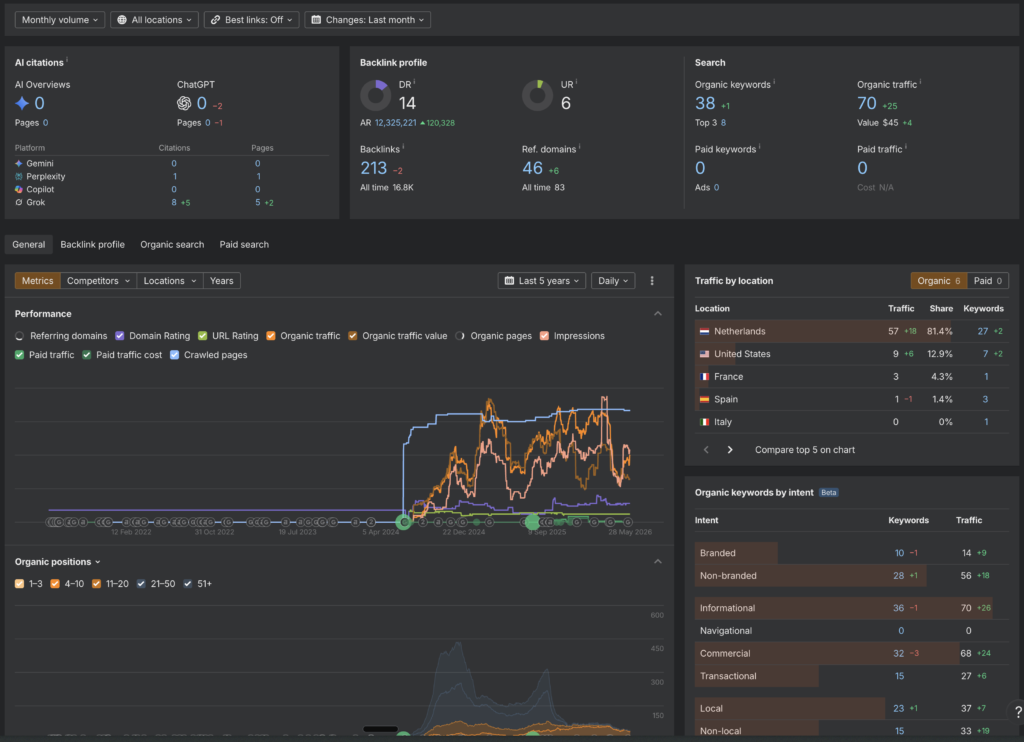
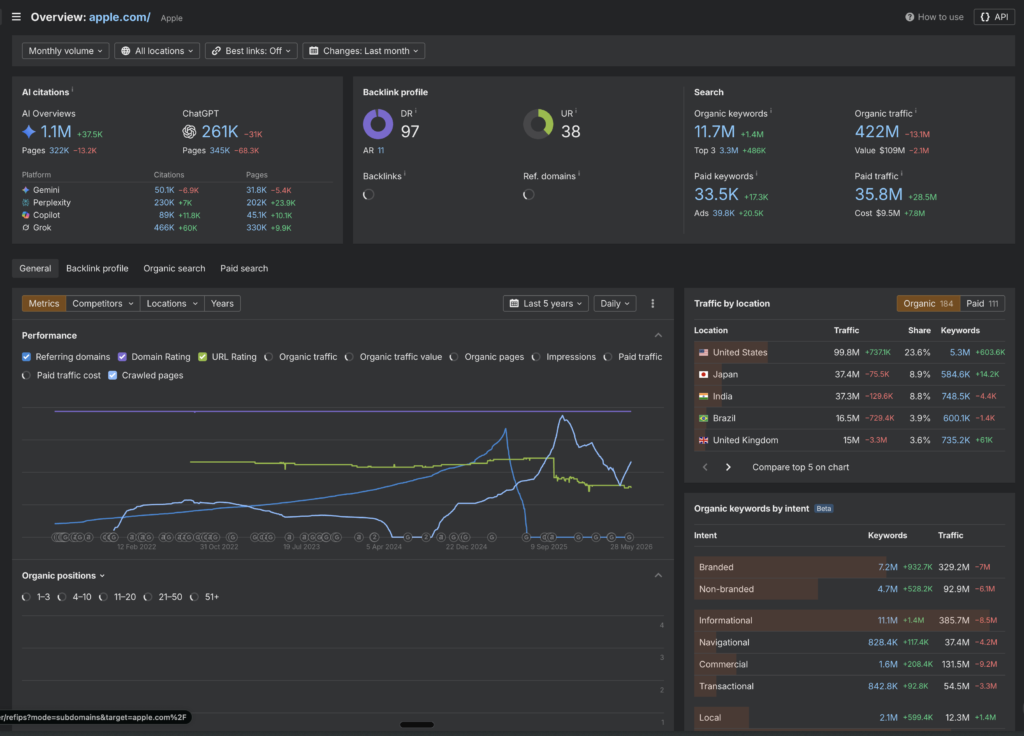
Site Explorer is your window into the SEO performance of any domain on the web, including your competitors. You type in a URL and get a full breakdown: who links to that site and how good those links are, which keywords it ranks for, how much organic traffic it pulls, which pages do the heavy lifting, and what that traffic would cost if you bought it through ads.
This is the tool we open first during a competitor audit. Say you run a webshop and a rival is outranking you. Drop their domain into Site Explorer and you will often find that their most-linked page is a single in-depth guide pulling in links for years. That one insight can redirect your whole content plan toward the formats that actually earn links in your niche.
Keywords Explorer: find what your customers search for
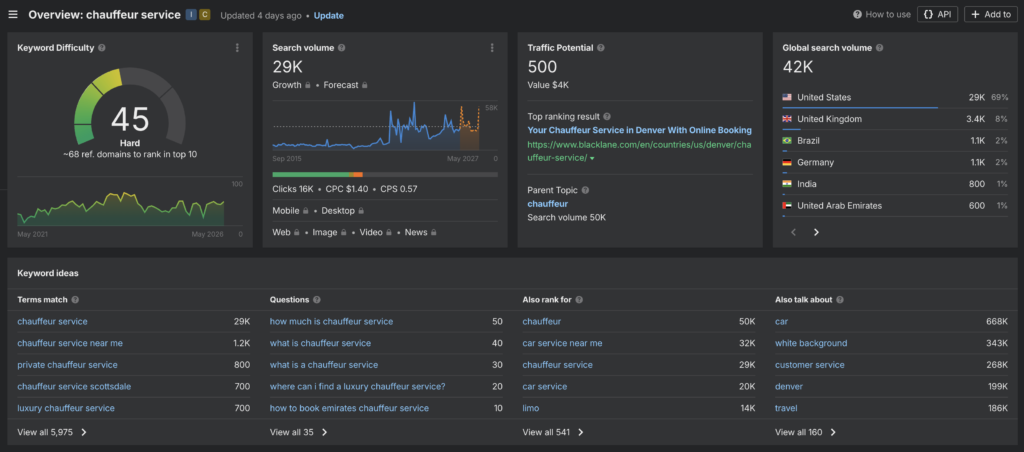
Keywords Explorer shows you the exact terms your audience uses, and goes far past raw search volume. It gives you keyword difficulty so you know how hard a term is to win, real click data so you know whether searchers even click results, related keyword ideas to widen your targeting, and parent topics that let one strong page rank for many terms at once.
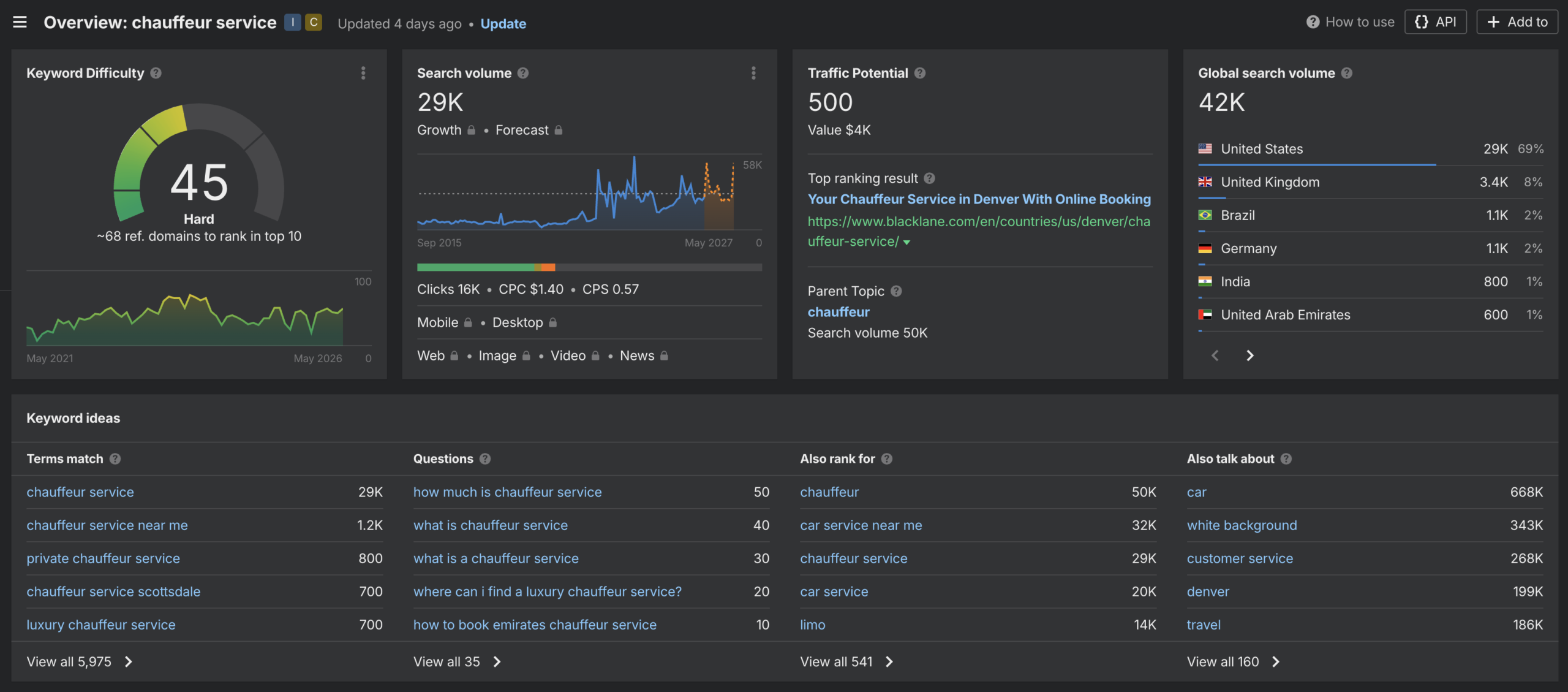
The real value is prioritization. Instead of chasing a high-volume head term you will never crack, you find the achievable ones. A local business might spot that “best [service] in [city]” has solid volume but far lower difficulty than the broad term, which hands them a clear, winnable direction. We use exactly this logic when planning content clusters for clients.
Content Explorer: discover what already performs
Content Explorer works like a search engine for the best-performing content in any niche. It helps you find topics getting shared and linked right now, spot gaps your competitors missed, identify sites that publish on your topics for outreach, and see which formats actually win.
One quick example. If you are planning a piece on packaging, a search here might reveal that “zero-waste packaging alternatives” earns far more links and shares than “eco-friendly packaging options.” Same topic, very different result. That single comparison can change your angle before you write a word.
Rank Tracker: watch your positions over time
Rank Tracker does what the name says, but with useful depth. It shows how your positions move over time, whether you appear in SERP features like featured snippets, how you compare against competitors tracking the same terms, and your overall visibility in your niche.
This is where you catch problems early. If your rankings drop across several keywords right after a site update, Rank Tracker flags it, and you can chase down the technical cause before it costs you a quarter of traffic.
Site Audit: find and fix technical problems
The best content will not rank if the site underneath it is broken. Site Audit crawls your website and surfaces the issues that hurt you: broken links, missing title tags and meta descriptions, slow pages, duplicate content, mobile usability faults, and indexation problems that stop Google crawling you properly.
What makes it genuinely useful is that every issue comes with a plain explanation of why it matters and how to fix it. That turns technical SEO from a specialist dark art into a checklist a capable marketer can work through. Ahrefs has also layered in AI features, including a content grader that measures your page against what currently ranks and recommendations that point at the fixes most worth doing first. These speed up the work. They do not replace the judgment of someone who knows what they are looking at.




4. Understanding the key Ahrefs metrics
To get value from Ahrefs you need to read its metrics correctly. A handful matter more than the rest.
Domain Rating (DR)
Domain Rating measures the strength of a site's backlink profile on a scale from 0 to 100. It is driven mostly by the number of unique referring domains, the DR of those linking sites, and whether the links pass authority. Use it to compare your authority against competitors and to track your own growth over time.
One warning. DR is a single signal, not the whole truth. A focused DR 50 site that is entirely about your niche can be worth far more to you than a DR 90 general news site that happens to mention you once. Relevance beats raw authority more often than beginners expect.
URL Rating (UR)
Where DR rates a whole domain, URL Rating rates a single page. It reflects the direct backlinks to that page, internal links from strong pages on the same site, and the authority of the linking domains. UR correlates closely with actual Google rankings, which makes it one of the more predictive numbers in the tool. Use it to find your strongest pages, and to spot competitor pages weak enough that you have a real shot at outranking them.
Keyword Difficulty (KD)
Keyword Difficulty estimates how hard it is to land in the top 10 for a term, again on a 0 to 100 scale. It looks at the backlink strength and authority of the pages already ranking. A DR 30 site will not rank for "insurance" at KD 98, but "insurance for freelance designers" at a lower KD is a genuine opportunity. KD is not an exact science, but it is an excellent starting point for deciding what to chase.
Traffic Value
Traffic Value estimates what your organic traffic would cost if you bought it through Google Ads. It multiplies the keywords a site ranks for by their search volumes and their cost-per-click. Even if you never run a single ad, this number is gold for one reason: it puts a euro figure on your SEO. When you need to justify the investment to a board or a sceptical founder, Traffic Value translates rankings into money.
5. How to actually use Ahrefs to grow
Theory is fine, but the point is results. Here is how the tool turns into traffic in practice.
Competitor analysis
Studying competitors is one of the highest-leverage things Ahrefs lets you do. The workflow is simple. Find your true competitors with the Competing Domains report, analyse their backlinks for link opportunities, study their best content to shape your own, uncover the keywords they target, and watch their growth to spot tactics that are working. You build on what already wins in your industry instead of starting from a blank page. You might discover a rival ranking for "affordable [your product] alternatives," a term you never considered that quietly sends them buyers every month.
Backlink analysis and link building
Good link building starts with knowing your own profile. The Link Intersect tool finds sites that link to several competitors but not to you, which are your warmest prospects because they already link to businesses like yours. You can also find broken links on relevant sites and offer your content as the replacement. A resource page that already links to three of your competitors is far more likely to add you than a cold stranger, and that targeting beats blasting random outreach emails every time.
Keyword research that fits your business
Keyword research is not about chasing the biggest numbers. It is about finding the right terms for your specific site. Start with seed keywords tied to your products, expand with the keyword ideas report, then filter by volume, difficulty, and clicks. Group everything by search intent and prioritize based on what your site can realistically rank for today.
One detail that matters enormously in 2026: clicks per search. "Weather in Chicago" might get thousands of searches and almost no clicks, because Google answers it directly on the results page. Volume without clicks is a trap, and Ahrefs is one of the few tools that shows you the difference before you waste months on it.
Content strategy
This is where Ahrefs earns its keep for us. The Content Gap tool shows terms your competitors rank for and you do not. Content Explorer shows what already performs in your niche. Together they let you build content briefs from evidence rather than hope, and the organic traffic report tells you which existing pages are sliding so you know what to refresh.
The first rule of web copy still holds: it is about your reader, not about you. Ahrefs helps because it shows you what your reader actually wants, in their own words. You might learn that how-to guides reliably beat listicles in your industry, or that pages with specific data points earn more links. That moves your content from guesswork to a system.
Technical SEO auditing
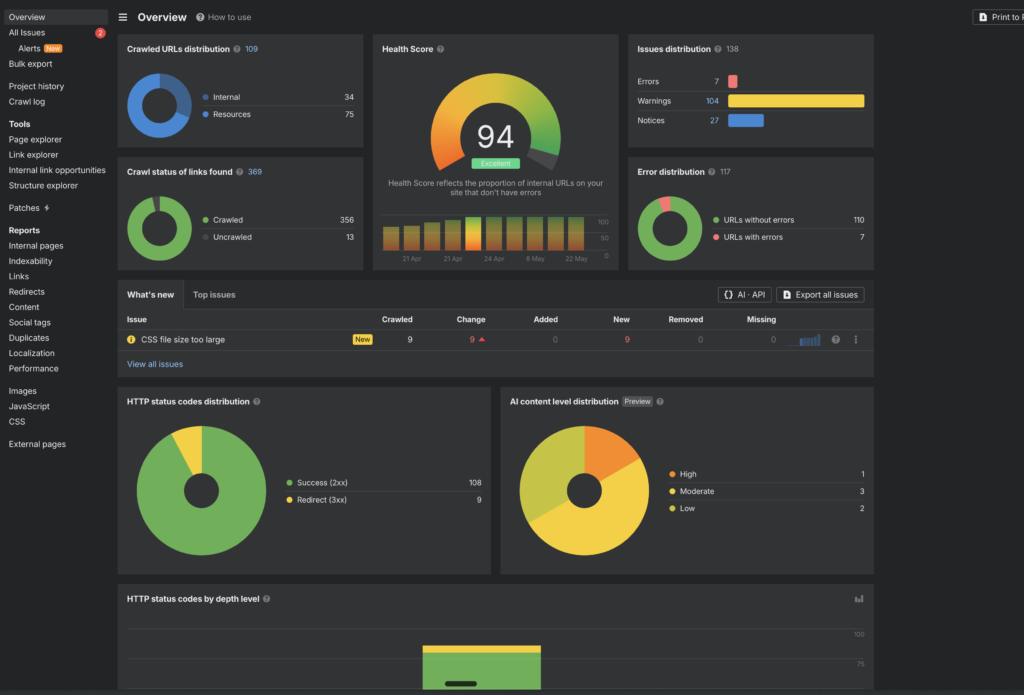
Regular audits keep a site competitive. Ahrefs Site Audit finds the critical issues, ranks them by impact, and re-crawls on a schedule so you can watch site health improve. Many tools find problems. Ahrefs explains why each one matters and how to fix it, which is the difference between a report that sits unread and one that actually gets actioned. You might find that a fifth of your pages share duplicate title tags, a quiet issue that suppresses rankings until someone fixes it.
6. What does Ahrefs cost in 2026?
Ahrefs is not cheap, and it does not pretend to be. Here is the current pricing, verified for 2026.
- Starter: $29 per month, for light research and the occasional audit
- Lite: $129 per month, backlink monitoring and basic keyword research
- Standard: $249 per month, adds Content Explorer and more history, the sweet spot for most agencies
- Advanced: $449 per month, for teams running many projects and client dashboards
- Enterprise: from $1,499 per month, with SSO, audit logs, and API access at scale
A few things worth knowing before you sign up. Ahrefs no longer offers a traditional free trial, so the $29 Starter plan is the lowest-risk way to test whether it fits your workflow. Ahrefs Webmaster Tools is genuinely free for verified owners of a site, giving you backlink and keyword data for your own domain with no competitor research. Annual billing saves roughly 17 percent, the equivalent of two months free. Is it worth it? If organic search is a real channel for your business, yes. If you only need it once a quarter, the Starter plan or a cheaper rival probably serves you better.
7. How Ahrefs compares to the competition
The main rival is Semrush, and the honest answer is that they are both excellent tools that overlap heavily. The distinction most professionals draw is this: Ahrefs has the edge on backlink and keyword data quality and feels cleaner for organic-growth work, while Semrush packs in more tooling around paid search, social, and broader marketing. Semrush also offers a free trial, which Ahrefs does not.
Cheaper alternatives like Mangools or SE Ranking cover a narrower toolset at a friendlier price and suit solo bloggers and beginners well. For an agency running organic growth as a core service, the depth and reliability of Ahrefs data usually justifies the premium. The tool you choose matters far less than whether you know how to use it.
8. How Viralistic uses Ahrefs to grow real businesses
A tool guide is abstract until you see it applied, so here is the concrete version. At Viralistic we treat Ahrefs as the research engine behind our SEO strategy, not as the strategy itself.
Take SilverDrive, a premium Amsterdam chauffeur service we work with. They run zero paid advertising. No Google Ads, no social ads, nothing. Every client they win comes through organic search, and they have grown into an international operator on that alone. Ahrefs is part of how we got them there. We use Keywords Explorer to find the terms their high-value clients actually search, Content Gap to see where competitors rank and they do not, and Site Audit to keep the technical foundation clean. The strategy and the writing are ours. Ahrefs is the map that tells us where to point them.
That is the lesson we want you to leave with. Ahrefs is the most powerful SEO tool on the market, and it will still do nothing on its own. Pair it with a clear strategy and a team that knows how to read the data, and it becomes the difference between guessing and knowing.
Frequently asked questions about Ahrefs
Is Ahrefs worth the money?
Ahrefs is worth it if organic search is a meaningful channel for your business and you will use it regularly. For backlink data, keyword research, rank tracking, and site audits it is one of the best tools available. If you only need occasional research, the $29 Starter plan or a cheaper competitor will serve you better than the higher tiers.
Does Ahrefs have a free trial?
No. Ahrefs removed its paid trial years ago and has not brought it back. The closest thing to free access is Ahrefs Webmaster Tools, which gives verified site owners backlink and keyword data for their own domain at no cost. To test the full platform, the $29 Starter plan is the lowest-risk option.
What is the difference between Ahrefs and Semrush?
Both are top-tier SEO platforms with heavy overlap. Most professionals rate Ahrefs higher for backlink and keyword data quality and for organic-growth work, while Semrush offers broader tooling around paid search and social plus a free trial. The right pick depends on whether your focus is organic SEO or all-round digital marketing.
What is a good Domain Rating in Ahrefs?
There is no universal "good" number, because Domain Rating is relative to your competition. Compare your DR against the sites you actually compete with in search rather than against the web as a whole. A focused, highly relevant site with a moderate DR often outperforms a high-DR site with no topical relevance to your niche.
Can Ahrefs help with AI search and AI Overviews?
Ahrefs is built primarily for classic search data: backlinks, keywords, rankings, and audits. It is less focused on AI Overview visibility or ChatGPT and Perplexity citations. For AI search optimization you generally need to pair traditional Ahrefs data with content built specifically for AI extraction, which is part of how we approach client work at Viralistic.
Do I need an agency to use Ahrefs effectively?
No, plenty of in-house teams and founders use it well. But the tool only shows you data. Turning that data into rankings and revenue takes strategy, content, and technical execution. If you lack the time or the in-house skill, an agency that already lives inside Ahrefs will get results faster than learning the platform from scratch.
Want to turn Ahrefs data into actual growth?
You now understand what Ahrefs is, what each tool does, and what it costs. The harder part is turning all that data into rankings, traffic, and revenue, and that is exactly what we do at Viralistic. We use Ahrefs every day to grow Dutch and international businesses through organic search, the same way we grew SilverDrive with zero ad spend.
Book a 30-minute strategy call with me. We will look at your current search performance, the opportunities your competitors are missing, and whether organic growth is the right play for your business. No pitch deck, no pressure. Just a clear answer on where your traffic could come from.
Book your SEO strategy call with Viralistic and find out what the right tool, in the right hands, can do for your growth.