
Most owners hear the term “Black Belt” when a process starts to hurt: orders go wrong, approvals stall, the same report gets rebuilt every Monday. Someone suggests hiring a Lean Six Sigma Black Belt, someone else suggests automating the whole thing, and nobody can say which of the two the business needs.
This guide answers that. It explains what a Six Sigma Black Belt does, how the belt levels differ, how DMAIC works and what the main certification bodies ask for, with the exam facts taken from ASQ, IASSC and CSSC themselves. Then it gives a straight answer to the question competitors skip: when you need a belt holder and when you need an automation specialist. Viralistic does not train or certify belts. We build automations with n8n, and we share the conviction behind Lean Six Sigma: improve the process before you automate it. For the wider context, start with our guide to Lean management and its five principles.
What is a Six Sigma Black Belt?
A Six Sigma Black Belt is the person who leads improvement projects that are too complex, too cross-functional or too data-heavy for a team to solve by instinct. ASQ, the American Society for Quality, describes the Black Belt as someone who leads problem-solving projects and trains and coaches project teams, and who understands every part of the DMAIC model. In most organisations that run Six Sigma seriously, the Black Belt does this full time.
Six Sigma itself is a data-driven method for reducing variation in a process. It started at Motorola in the 1980s, and its name refers to a statistical target: a process running at six sigma produces 3.4 defects per million opportunities, according to ASQ’s Six Sigma overview. The belt names borrow from martial arts. They signal how much of the method someone has mastered, not a job title.
What separates a Black Belt from a capable project manager is the toolkit. A Black Belt works with hypothesis tests, regression, design of experiments (DOE), measurement system analysis and statistical process control, usually in software such as Minitab. Just as important is the softer half of the job: choosing the right project with management, getting a team to accept the data, and making the change stick after the project ends.

What a Black Belt does in a typical week
A Black Belt’s week moves between analysis and people. The recurring tasks are:
- Selecting projects with a Champion (the executive sponsor) and writing the project charter.
- Leading the team through DMAIC, from the first problem statement to the handover.
- Analysing data to find root causes rather than symptoms.
- Quantifying the result. ASQ only accepts a Black Belt project with measured before-and-after cost benefits, so the financial case belongs in the project from the first day.
- Coaching Green and Yellow Belts who run smaller projects or collect data.
- Reporting to sponsors and removing obstacles the team cannot remove itself.
Six Sigma belts explained: from White Belt to Master Black Belt
The Six Sigma belts form a ladder of knowledge and responsibility: White, Yellow, Green, Black and Master Black Belt. Each step adds depth in the method and a bigger role in projects. ASQ’s overview of Six Sigma belts and roles defines them like this:
| Belt | Role in a project | Typical depth |
|---|---|---|
| White Belt | Understands the basic concepts; may support local problem-solving teams | A short awareness session |
| Yellow Belt | Project team member who reviews process improvements and supports the project | The foundations of DMAIC |
| Green Belt | Collects and analyses data for Black Belt projects and leads smaller projects alongside a regular job | DMAIC plus core statistics |
| Black Belt | Leads complex problem-solving projects and trains and coaches project teams | Advanced statistics, DOE and change leadership |
| Master Black Belt | Trains and coaches Black and Green Belts, sets programme metrics and strategic direction, internal consultant | Programme level, teaching and strategy |
Two roles sit outside the belts. Champions turn company goals into a deployment plan, pick projects and clear roadblocks. Executives set the strategic focus of the whole programme. A “Brown Belt” also appears now and then; ASQ notes it is not traditionally used and not recognised by most organisations.
Green Belt vs Black Belt
The difference is scope and time. A Green Belt improves processes in their own area, part time, with the core tools. A Black Belt takes on cross-functional problems with unclear causes, works on them full time, uses the heavier statistics and coaches the Green Belts. In practice, many people earn a Green Belt first, although not every certification body requires it.
What a Master Black Belt adds
A Master Black Belt runs the programme rather than single projects: training new Black Belts, choosing which problems deserve a project and keeping the metrics honest. ASQ only lets a certified Black Belt sit its Master Black Belt exam after a portfolio review showing at least five years in a Black Belt or Master Black Belt role, or ten completed Black Belt projects.
DMAIC: the method behind every Six Sigma belt
DMAIC is the five-phase project cycle every Black Belt works through: Define, Measure, Analyse, Improve and Control. Each phase ends with a clear output, so a project cannot jump from a hunch to a fix. ISO 13053-1 describes the same methodology as an international standard.
- Define. Agree on the problem, the customer’s requirements (the critical-to-quality characteristics, or CTQs), the scope and the goal. Output: a signed project charter.
- Measure. Establish the baseline. Check that the measurement system itself is reliable, then measure how the process performs today.
- Analyse. Find the root causes with tools such as a fishbone diagram, Pareto analysis, hypothesis tests and regression. The question here is “why”, backed by data.
- Improve. Design, test and pilot changes that remove those causes, often with design of experiments and mistake-proofing.
- Control. Lock in the gain with control charts, standard work and a control plan, then hand the process back to its owner.
For a new product or process, Six Sigma uses DMADV instead (Define, Measure, Analyse, Design, Verify), also known as Design for Six Sigma. DMAIC is also more formal than the PDCA cycle: PDCA is a short loop you repeat, while DMAIC is a project with gates and a sponsor.

Lean vs Six Sigma vs Lean Six Sigma
Lean removes waste, Six Sigma removes variation, and Lean Six Sigma combines both. Lean comes from the Toyota Production System and asks which steps add no value for the customer. Six Sigma asks why the result of a step varies and uses statistics to answer it.
| Lean | Six Sigma | Lean Six Sigma | |
|---|---|---|---|
| Main target | Waste: waiting, rework, unnecessary steps | Variation and defects | Both |
| Typical tools | Value stream mapping, kaizen, 5S, visual control | Statistical analysis, DOE, statistical process control | Both toolkits, chosen per problem |
| Origin | Toyota | Motorola | Combined in practice over time |
ASQ notes that the line between the two has blurred and that successful programmes often start with Lean: remove the waste, map the value stream, and only bring in the heavier Six Sigma statistics if problems remain. That order matters. If you want to see the waste first, read our guides to the 8 wastes of Lean and to value stream mapping. Many courses are now sold as Lean Six Sigma, so a Lean Six Sigma Black Belt and a Six Sigma Black Belt usually cover the same DMAIC core, with the Lean variant adding more flow and waste tools.
How do you get Six Sigma Black Belt certification?
You earn a Six Sigma Black Belt by passing an exam from a certification body, and with some bodies by proving a completed project. No single authority owns the title. The three names you meet most often are ASQ, IASSC and CSSC, and they differ more than their marketing suggests. The facts below come from each body’s own Black Belt page, checked in November 2026.
| As of November 2026 | ASQ (CSSBB) | IASSC (ICBB) | CSSC (Black Belt) |
|---|---|---|---|
| Exam | 165 multiple-choice questions (150 scored), 4 hours 18 minutes | 150 questions, 4 hours, proctored | 150 questions, 3 hours, online or at a test centre |
| Book policy | Open book | Closed book | Open book |
| Project required | Yes: one project with signed affidavit plus three years of relevant work experience, or two projects | No | No (its Level II Black Belt adds a project) |
| Pass mark | Not stated on the exam page | 70% | 420 of 600 points |
| Exam fee | $585 ($100 less for members), retake $385 | $450 | $295 |
ASQ. The ASQ Certified Six Sigma Black Belt is the most demanding of the three because of its project requirement: a real project with real financial benefit, signed off by a Champion. Classroom exercises and simulated projects do not count. The programme is accredited by the ANSI National Accreditation Board (ANAB) under ISO 17024.
IASSC. The IASSC Certified Lean Six Sigma Black Belt tests knowledge only. There are no prerequisites, IASSC does not train, and the exam runs at Pearson VUE test centres or online through PeopleCert. IASSC recognises the certification perpetually and treats it as “current” for three years.
CSSC. The Council for Six Sigma Certification offers the cheapest route, an open-book exam with three attempts, and certifications that do not expire.
Many people also earn a Black Belt through a university or training provider that runs its own exam. In Europe, look for alignment with ISO 18404, the ISO standard for Lean and Six Sigma competencies that defines what a Black Belt and Green Belt should be able to do.
What Black Belt training involves
Black Belt training combines classroom days, statistics software and a real project in your own organisation. European programmes we checked run from about 10 to 20 training days spread over several months: the University of Amsterdam lists 11 days, the Dutch provider 5ST3PS 10 days, and Germany’s DGQ five four-day modules. Expect advanced statistics, design of experiments, statistical process control, Lean flow tools, change management and coaching skills, with a project running alongside the course so every phase is applied straight away.
Does Six Sigma still matter when software can do the work?
Yes, but its centre of gravity has moved. The core idea, that you fix a process by understanding its causes with data, is as sound as it was at Motorola. What changed is where the work happens. In most service businesses the process now runs through SaaS tools, inboxes and spreadsheets, and the data a Black Belt once collected by hand already sits in logs and exports.
That shift cuts both ways. Analysis gets faster. And the Control phase, traditionally the weakest part of an improvement project because people slide back into old habits, can now be built into the process itself. A standard that lives in an automated workflow does not drift the way a laminated work instruction does. Training providers see it too: 5ST3PS in the Netherlands, for example, now sells an AI Black Belt next to its classic programmes.
Black Belt or automation specialist: who does your business need?
A Black Belt diagnoses why a process produces inconsistent results and fixes the causes. An automation specialist hands the stable, repeatable steps of a process to software. They solve different problems, and most small and mid-sized businesses need the second far more often than the first, after a round of plain Lean thinking.
| Your situation | Who you need |
|---|---|
| A defect rate or variation you cannot explain, lots of data, many interacting causes (a production line, a high-volume claims process) | A Black Belt |
| Work that waits for approvals, gets copied between tools, re-entered or chased by email | Lean thinking first, then an automation specialist |
| A clear, rule-based process that runs daily, works, and eats hours | An automation specialist |
| Steps that need judgement on text, such as sorting enquiries or drafting replies | An automation specialist who builds AI steps with a human in the loop |
| A company-wide programme with dozens of improvement projects | A Master Black Belt, plus automation capacity for what the projects standardise |
The trap is the middle of that table. A business sees waste, buys automation and ends up with a workflow that copies data between the same five tools a little faster. Automating a broken process produces the same waste at a higher speed. That is why we never build before the process is mapped, and why a specialist in n8n without a process view is half a solution.
How we apply DMAIC thinking to an automation project
We borrow the discipline of DMAIC, without the belt and without the heavy statistics that office processes rarely need. Every automation project at Viralistic follows the same order:
- Define. A success plan: which process, which outcome, which metrics and who owns them.
- Measure. The baseline: how long the work takes today and how often it goes wrong.
- Analyse. We map the process with the people who do it and mark every step as rule-based or judgement. Waste gets removed on paper first.
- Improve. Only then do we build, in n8n with Claude where judgement is needed. The method is described step by step in our guide to turning a business process into an agentic workflow.
- Control. Shadow mode first, then one-click approval, then full automation for the cases that proved reliable. Error workflows, logging and named owners keep the gain in place, following the six principles in our recap of n8n’s talk on reliability and governance.
The Control step is where automation earns its place next to Lean Six Sigma. A Black Belt fights to keep people on the new standard. A well-built workflow is the new standard.
Who is behind this guide
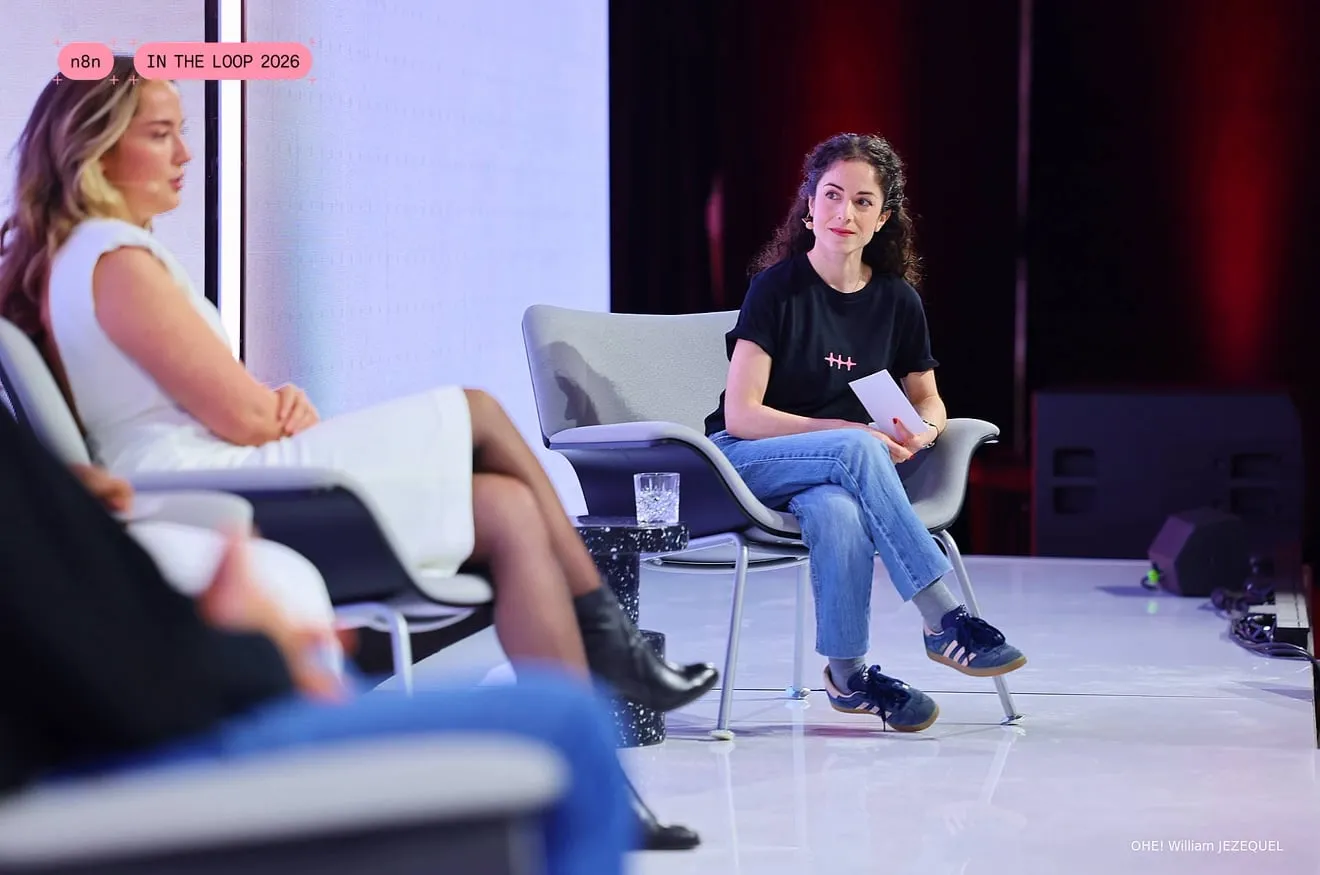
Marrallisa Kreijkes, founder of Viralistic in Amsterdam and an official n8n Ambassador, teaches exactly this order of work: process first, automation second. She taught the DataCamp webinar “How to turn a business process into an agentic workflow”, trained Volkswagen Pon Financial Services on getting found in AI, spoke on the main stage of In The Loop, n8n’s conference in Berlin, in October 2026, and gave a lecture at Anthropic, the company behind Claude. She also ran an n8n workshop at Maastricht University with the student associations MAIN and TCM. Teams at DataCamp, Volkswagen, n8n and Anthropic learned from her. When you work with Viralistic, you work with the person they brought in to teach. More about her talks and trainings is on the speaker page.
If your processes need a Six Sigma Black Belt, hire one; the statistics are worth it. If they need the waste taken out and the remaining steps handed to software, that is our work. Read more about Lean management, or talk to an automation specialist about the process that costs you the most hours.
Frequently asked questions
How long does it take to get a Six Sigma Black Belt?
Plan on several months, not weeks. Classroom programmes run about 10 to 20 training days spread over a few months, and the project takes as long as the problem does. The University of Amsterdam, for example, spreads 11 days over four months and then asks for a second project before it certifies you.
How much does Six Sigma Black Belt certification cost?
The exam alone cost $295 at CSSC, $450 at IASSC and $585 at ASQ in November 2026, with $100 off for ASQ members. Training is the larger cost. European classroom programmes we checked ranged from EUR 4,500 at 5ST3PS to EUR 9,075 at the University of Amsterdam and EUR 11,800 plus VAT at Germany’s DGQ.
Do you need a Green Belt before a Black Belt?
Not always. ASQ, IASSC and CSSC do not require a Green Belt certificate to sit their Black Belt exams, although ASQ requires a completed project. Many training providers do expect Green Belt knowledge, and some, such as TÜV SÜD in Germany, only admit Green Belts to their Black Belt course.
Which Six Sigma Black Belt certification is most recognised?
ASQ’s Certified Six Sigma Black Belt is the most demanding of the major certificates: it requires a real project with measured financial results and is accredited by ANAB under ISO 17024. IASSC is the best-known knowledge-only alternative. In Europe, look for university programmes and certificates aligned with ISO 18404.
How hard is the Six Sigma Black Belt exam?
It is demanding but passable with preparation. ASQ’s exam has 165 questions in 4 hours 18 minutes, open book, so speed with your references matters. IASSC’s is closed book with a 70% pass mark. The harder part is often the project: real data, real resistance and a result someone has to sign off.
What is a Six Sigma Black Belt salary?
Pay depends on country, sector and seniority, so treat any single number with care. ASQ’s 2020 Quality Progress Salary Survey found that US respondents with a Certified Six Sigma Black Belt earned on average $15,761 more than those without Six Sigma certification. Master Black Belts earned $26,123 more.
Can you get a Black Belt without completing a project?
Yes, with some certification bodies. IASSC and CSSC award their standard Black Belt on the exam alone. ASQ does not: you need one completed project with a signed affidavit plus three years of relevant experience, or two completed projects. Employers often value project-based certificates more, because they prove you delivered a result.
Does a small business need a Six Sigma Black Belt?
Rarely as a hire. A Black Belt pays off where variation is expensive and data is plentiful, such as manufacturing or high-volume services. Most small businesses lose time to waste instead: waiting, copying and rework. Lean thinking plus well-built automation usually delivers more there, and faster, than a full statistical project.
Is a Lean Six Sigma Black Belt the same as a Six Sigma Black Belt?
Almost. Both are built on DMAIC and the same statistical core. A Lean Six Sigma Black Belt adds more Lean tools, such as value stream mapping, flow and waste reduction. Since many programmes now combine the two, the labels are often used interchangeably. Check the body of knowledge behind the certificate rather than the name.

Written by
Founder of Viralistic and official n8n Ambassador
Marrallisa leads strategy, design, search and automation for premium brands from Amsterdam. She has trained teams at Volkswagen and speaks at n8n and Anthropic events. Want to talk through your situation? Book a call with her directly.