 Strategic call
Lecture
Anthropic
A lecture at the company behind Claude on predictable automation versus probabilistic AI, the same line that decides which steps we automate with rules and which with AI.
 /
Digital Partner
Marrallisa Kreijkes is an AI automation specialist in Amsterdam whom businesses hire when work keeps getting stuck between people and tools. She maps your process, removes the waste the Lean way, error-proofs what is left and then automates it with n8n and AI. The result: automations in production, measured, documented and owned by your team.
A data and AI learning platform, the n8n team, the company behind Claude, a car finance company and a university. Each asked her to explain how process, automation and AI fit together.
Webinar
The webinar How to turn a business process into an agentic workflow, on documenting a real process and turning it into a workflow AI can follow, built in n8n.
Explore ↗Berlin, October 2026
A speaker on the main stage of n8n's first conference ever, as an official n8n Ambassador.
Explore ↗Lecture
A lecture at the company behind Claude on predictable automation versus probabilistic AI, the same line that decides which steps we automate with rules and which with AI.
Training
A training on getting found in AI search, so the brand shows up in the answers of ChatGPT, Gemini and Google.
Explore ↗Maastricht, November 2026
A hands-on workflow automation workshop in n8n for students from every faculty, together with the student associations MAIN and TCM.
Explore ↗Photos n8n In The Loop 2026: William Jezequel (OHE!)
Every format has a starting price in EUR excluding VAT. Most clients begin with the scan, because it shows what a sprint should contain and what it is worth.
One process, from EUR 1,950
A value stream map of one process, with the waste and bottlenecks named and the automation opportunities ranked by value. You keep the map and the plan.
Explore ↗1 to 3 automations, from EUR 3,500
One to three automations live in production with n8n and AI. Tested, documented, with error handling and a measurement of what they save.
Explore ↗Per month, from EUR 2,500
A monthly retainer from EUR 2,500 per month. An automation lead who keeps improving and automating your processes, watches what runs and plans the next wave.
Explore ↗Organisation-wide, from EUR 15,000
Training, AI champions and governance across the organisation, so people use AI and automation every week, safely and with clear rules.
Explore ↗Most businesses that look for an automation specialist already know where it hurts. Invoices get retyped from email. A lead waits two days because the one person who handles it is on holiday. A weekly report eats Friday afternoon and nobody reads it. The tempting fix is to buy a tool and automate all of it. That is how you get waste at machine speed: the same copy-paste and the same approval queue, only faster and harder to see.
Marrallisa Kreijkes, founder of Viralistic, works in the opposite order. She maps the process with the people who run it, removes the waste the Lean way, error-proofs what remains and only then automates it with n8n, Claude and AI agents. Toyota described that order long before anyone said “AI agent”, and researchers found the same for office work in a bank. DataCamp, n8n, Anthropic and Volkswagen Pon Financial Services have all brought her in to teach how it works.
An automation specialist finds the repetitive work in your business processes and hands it to software, so your people spend their time on work that needs a person. In practice that means mapping how a process runs today, deciding what to automate and what to leave alone, building the workflows and keeping them running.
The title covers very different jobs. On job boards, an automation specialist is often a PLC engineer in a factory, a test automation engineer or someone who runs email campaigns. This page is about business process automation for office and digital work, for companies that want to hire an automation specialist per project or per month. Typical work looks like this:
An AI automation specialist adds one skill to that list: knowing where an AI model belongs in a workflow and, more often than people expect, where it does not.
Never automate a broken process. We remove the waste first, map the value stream, error-proof the steps and only then automate what is left with n8n and AI, measuring the result in a PDCA cycle. Five steps, each taken from Lean and translated to digital work.
The order is not our invention. Toyota’s own description of Jidoka, one of the two pillars of the Toyota Production System, says you do not start with a machine. You first do the work thoroughly by hand, remove waste, unevenness and overburden, make it possible for anyone to do it, and only then build the ability to detect problems into the machine. A case study at an Italian bank, published in 2012 in Production Planning & Control under the title “Lean first, then automate”, reached the same conclusion for service work: streamline the process first, then automate it. Our guides to Lean management and the Toyota Production System cover the background.
Office work carries the same waste as a factory floor: waiting for approvals, copying data between tools, searching for files, rework after errors and reports nobody reads. We name it with the 8 wastes of Lean and cut what adds nothing for your customer. A step you delete costs nothing to automate and never breaks.
We sit with the people who do the work and draw the process as it really runs, exceptions included, because exceptions are where automations break. A value stream map shows where time goes, where work waits and which steps are worth automating first. That map is the heart of the Lean process scan.
Before we build speed, we build checks. Required fields, validation, fixed formats and rule-based steps make the wrong input hard to enter, the idea Shigeo Shingo called poka-yoke. Anthropic’s own engineering guide on building effective agents tells developers to “poka-yoke your tools”. With AI in the process, this step matters more, not less.
Now we build. Rule-based steps go into plain n8n nodes: they do the same thing every time, cost next to nothing and are easy to check. An AI model such as Claude takes only the steps that need judgement, like reading free text or drafting a reply, each with one clear job and a structured output. That split between predictable automation and probabilistic AI is the subject of Marrallisa’s lecture at Anthropic.
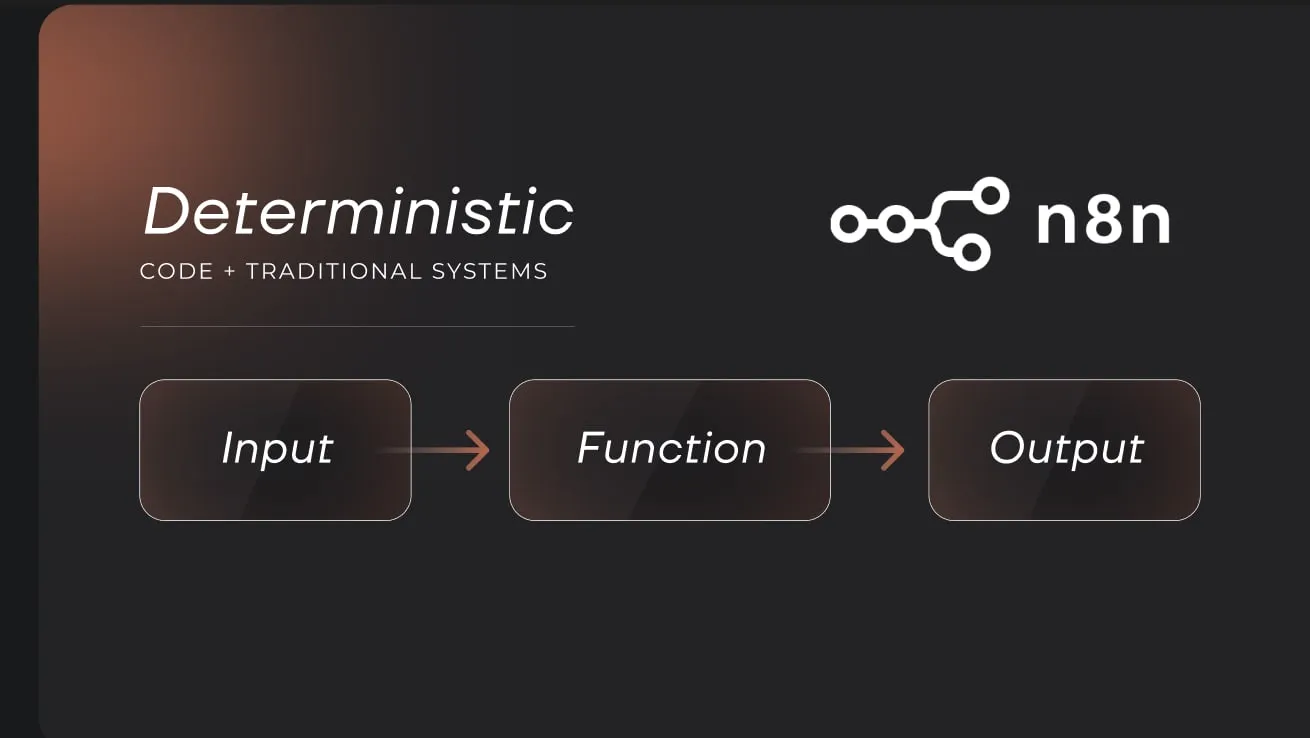
It is also Jidoka in software. The workflow stops and calls a person when something looks wrong, and a human approves anything irreversible before it leaves the company. The full method is in our help article on turning a business process into an agentic workflow, the subject of her DataCamp webinar.
Every automation starts with a success plan: the outcome, the metrics and who owns them. After go-live we check the results against that plan in a PDCA cycle, keep what works as the new standard and plan the next improvement. Small, steady steps, the way kaizen describes it, instead of one big rebuild every few years.
Organisations that already run Lean Six Sigma will recognise the rhythm of DMAIC: the scan does the defining, measuring and analysing, the sprint does the improving and the controlling. If you have a Lean Six Sigma Black Belt on staff, we work alongside them. Viralistic does not train or certify belts. We build what comes after the analysis.
You need one when the same manual work comes back every week, when it crosses several tools or people, and when nobody inside has the time or the skills to fix it properly. These are the signals we hear most:
The honest counterpart: sometimes you do not need one. If a process runs a few times a month, a checklist beats a workflow. If the process changes every week, settle it first, because automation freezes a process in place. If the real problem is a decision nobody wants to take, no workflow will take it for you. And if a tool you already pay for has a built-in automation that covers it, use that first. A good automation specialist tells you this in the first call, before sending an invoice.
An automation specialist at Viralistic costs from EUR 1,950 for a Lean process scan, from EUR 3,500 for an automation sprint, from EUR 2,500 per month as a fractional automation lead and from EUR 15,000 for an AI adoption programme. All prices exclude VAT.
| Format | What you get | From (excl. VAT) |
|---|---|---|
| Lean process scan | A value stream map of one process, the waste and bottlenecks, automation opportunities by value | EUR 1,950 |
| Automation sprint | One to three automations live in production with n8n and AI, tested and measured | EUR 3,500 |
| Fractional automation lead | A monthly retainer to keep improving and automating | EUR 2,500 per month |
| AI adoption programme | Training, AI champions and governance across the organisation | EUR 15,000 |
The price of a sprint follows three things: how many systems are involved, how many exceptions the process has and how much risk sits in the steps. A workflow that sends payments needs more checks than one that sorts email. The scan comes first for most clients because it turns a vague wish into a scoped sprint with an expected return. Running n8n itself is a separate cost: on your own server, on n8n Cloud or through our hosting partner in Europe. The AI adoption programme builds on the trainings described on the AI speaker and trainer page.
Because the people who build and teach automation and AI asked her to teach it. Marrallisa Kreijkes has more than ten years of experience across agency work and IT process optimisation, and she builds automations for clients every week with n8n, Claude and Notion. Her teaching track record:
Audiences at DataCamp, n8n, Anthropic and Volkswagen learned from her. When you hire her, you work with the person they brought in to teach, and she builds your automations herself.
A freelance automation specialist gives you one expert and short lines. An agency gives you capacity and continuity, sometimes with juniors doing the build. Viralistic sits in between: Marrallisa leads and builds the work herself, and every automation is documented, monitored and owned by your team, so nothing depends on one person’s memory.
| Freelancer | Agency | Viralistic | |
|---|---|---|---|
| Who builds | The person you hired | Often a team you never meet | Marrallisa, the person you talk to |
| Process thinking | Depends on the person | Depends on the account manager | Lean scan before every build |
| After go-live | Gone when the project ends | A support contract | Handover to your team, or a monthly retainer |
| Price | Hourly, often the lowest | Project fees plus overhead | Fixed starting prices per format |
Two related pages, in case your question is narrower. Need hands on n8n only? See the n8n specialist page. Is the leak in your website rather than your back office? A CRO specialist is the better hire.
Choose the specialist who asks about your process before naming a tool. Then check six things:
Red flags: a guaranteed saving before anyone has seen your process, an AI agent for everything, no plan for maintenance and the same template sold to every client. Our guides to workflow automation services and to choosing an AI automation agency go deeper. For how we scale from one workflow to a whole organisation, see value-first automation and the n8n rollout.
An automation specialist is worth hiring when the process gets better before it gets faster. That is the whole method: remove the waste, map the value stream, error-proof the steps, automate what is left with n8n and AI, and measure it. Marrallisa works from Amsterdam for clients in the Netherlands and across Europe, in English or Dutch. Tell her which process costs you the most hours in a 30-minute call, and you get an honest answer on whether automation is worth it.
At Viralistic, a Lean process scan costs from EUR 1,950, an automation sprint with one to three automations from EUR 3,500, a fractional automation lead from EUR 2,500 per month and an AI adoption programme from EUR 15,000, all excluding VAT. The final price depends on the number of systems, exceptions and risk in the process.
Hire a freelancer for a small, well-defined job and an agency when you need capacity across many teams. If you want a senior specialist who builds the work herself and still hands you documentation, monitoring and ownership, a specialist-led studio such as Viralistic combines the strengths of both.
The aim of a sprint is the first automation in production within 30 days, depending on how quickly we get access to your systems. A Lean process scan of one process is shorter: a few working sessions with the people who do the work, followed by the map and a ranked list of opportunities.
Pick one process that costs time every week and the person who runs it. Bring examples of the inputs, such as emails, forms or invoices, a list of the tools involved and the exceptions you know about. Access to systems can follow later; we set it up in parallel with the build.
An automation consultant mainly advises on what to automate and in which order. An automation specialist also builds and runs the workflows. Viralistic does both: the Lean process scan is the consulting part, and the automation sprint puts one to three automations into production with n8n and AI.
No. You do not need a belt or a Lean programme to start. The Lean process scan applies the thinking for you: it maps the process, names the waste and error-proofs the steps before anything is built. Teams that already work with Lean or Six Sigma get a faster start because their processes are documented.
Start with a process that runs daily or weekly, has a clear start and end, and where a mistake is easy to spot and fix. Lead intake, invoice processing, request sorting and weekly reporting are common first choices. Leave payments and other irreversible steps until the first automations have proven themselves.
Your team owns them. Every workflow is documented, has a named owner and logs what it does, and we train the people who look after it. If you prefer not to run it yourself, the fractional automation lead monitors, updates and improves your automations from EUR 2,500 per month.
It can be, when the automation is designed for it. We give every workflow and agent its own credentials with the least access it needs, keep a person in the loop before irreversible actions, log what happens and handle personal data in line with the GDPR. n8n can run on your own server or with hosting in Europe.
We build in n8n, with Claude and other models for AI steps and Notion where a team needs a shared workspace. n8n connects to almost any tool with an API, so your CRM, finance software and inbox stay where they are. If your organisation is committed to another platform, we tell you in the first call whether we are the right fit.
Each step ends with something you keep, so you can stop or scale at any point.